Some drain problems can wait until morning. Sewage coming up through a floor drain, wastewater rising in the tub, a fully blocked main line — those can't. Every gallon you send down while the line is blocked has to go somewhere, and it goes into the lowest fixture in the house. Fast action is the difference between a cleared line and a cleanup job.
When you call with an active backup, you jump to the front of the schedule. We triage on the phone first: which fixtures are affected, is it spreading, is there sewage involved. That tells us whether it's a branch line or a main-line problem, so the technician arrives with the right equipment — augers, jetter, and camera — instead of making two trips.
Not every urgent-sounding drain is a true emergency, and we'll tell you straight which one you have. A single slow sink can usually wait a day. Sewage anywhere it shouldn't be cannot. Call, describe what's happening, and we'll give you an honest answer on timing.
Call now if you see this
- Sewage or wastewater backing up into tubs, showers, or floor drains
- Multiple fixtures clogged or backing up at the same time
- Toilet water rising when other fixtures drain
- A strong sewage odor spreading through the house
- Backup spreading from one room to another
- Standing wastewater that won't recede
What happens when you call
1 Phone triage
Tell us what's backing up and where. We determine whether it's a branch line or a main-line blockage and whether sewage is involved — that decides what equipment rolls.
2 Stop the damage
While the technician is on the way: stop running water anywhere in the house, shut off the valve to any overflowing fixture, and keep people and pets away from standing wastewater.
3 Clear the blockage
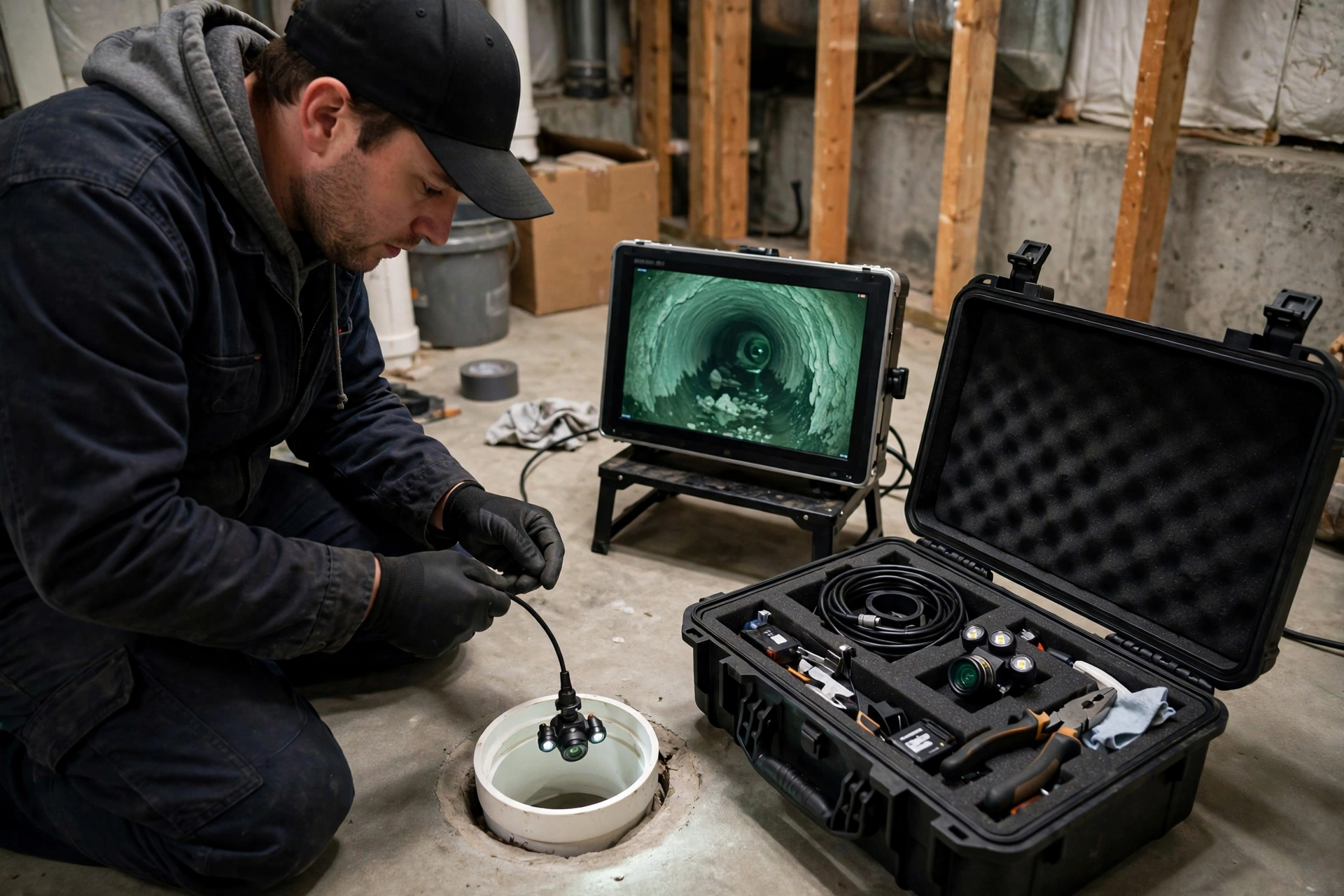
The technician clears the line with the right method — augering for branch blockages, jetting for grease and roots, camera inspection when a main line is suspect. We confirm flow is fully restored before we leave.
4 Find the cause
Emergencies have causes: root mats in clay laterals, collapsed sections, heavy grease. If the camera shows a structural problem, we show you the footage and explain the real fix so this doesn't become a monthly event.
Drain emergencies in Stow
Stow's emergency calls have a pattern, and it's written in clay tile. Most of the city's homes were built from the 1950s to the 1970s with clay-tile sewer laterals, and forty-plus years of maple and oak roots have found every shifted joint. Add freeze-thaw movement in Summit County's dense clay soil, and main-line blockages are the most common after-hours call we get. Heavy spring rains make it worse — saturated soil pushes groundwater into compromised laterals. If your Stow home has never had its lateral camera-inspected, an emergency backup is often how people discover the problem.
Need emergency drain cleaning in Stow?
No forms, no waiting — one call connects you with a local technician.
(330) 952-8787 📞 Call Now